Connecting therapy with life at home.
Designing linked patient and therapist experiences for home rehabilitation after stroke or traumatic brain injury.
Home exercises were hard to remember and difficult for therapists to follow.
Led research with five patients and five therapists, linked app concepts and usability testing.
Usability findings informed iteration; the features were still in development at the time.
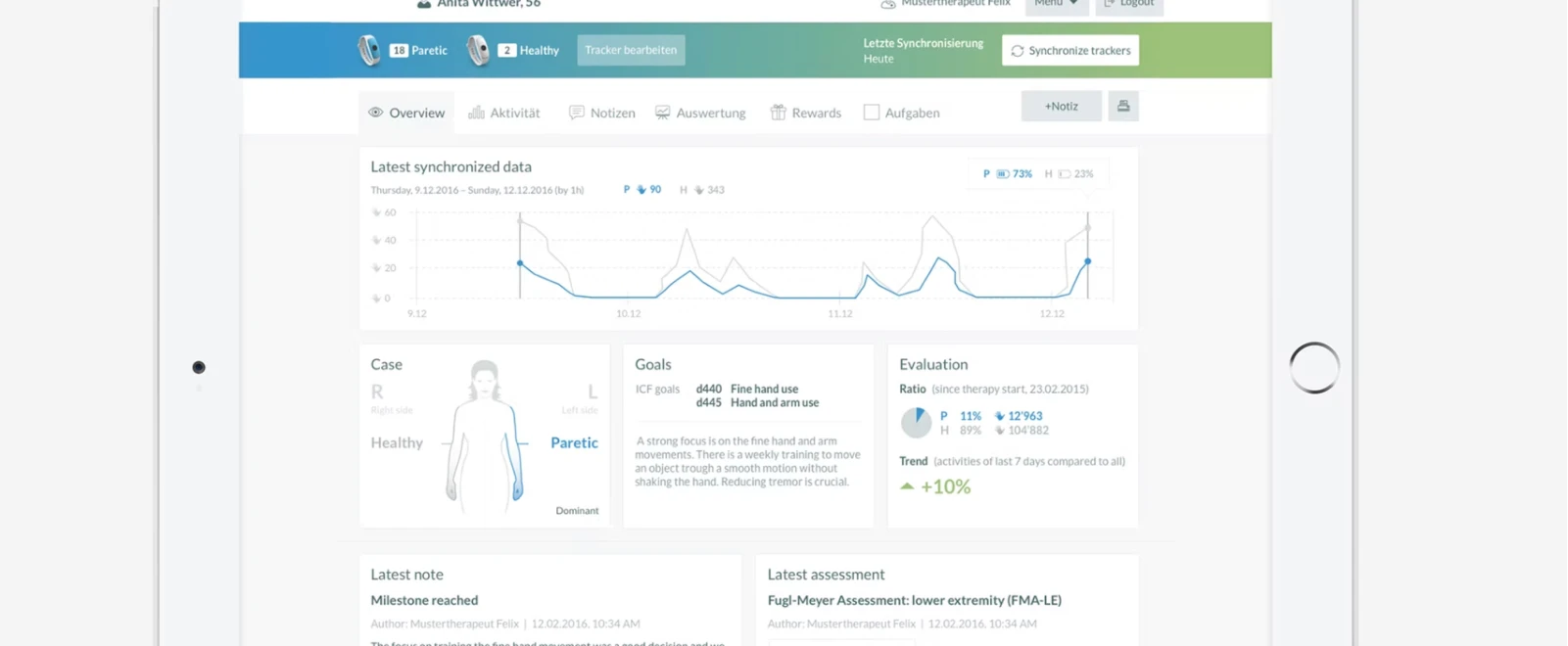
Therapy needed to extend beyond the appointment
Therapists needed to give patients specific exercises for home rehabilitation. Patients could struggle to remember the movements, frequency and repetitions, while therapists had limited visibility into what happened between appointments.
Leading research, product design and a shared system
I led the redesign with a focus on goals and evaluation criteria, conducting research, developing concepts for the patient and therapist apps, testing usability and refining the designs. I introduced an Atomic Design approach to address inconsistencies and support future team members.
Ten interviews reframed the problem
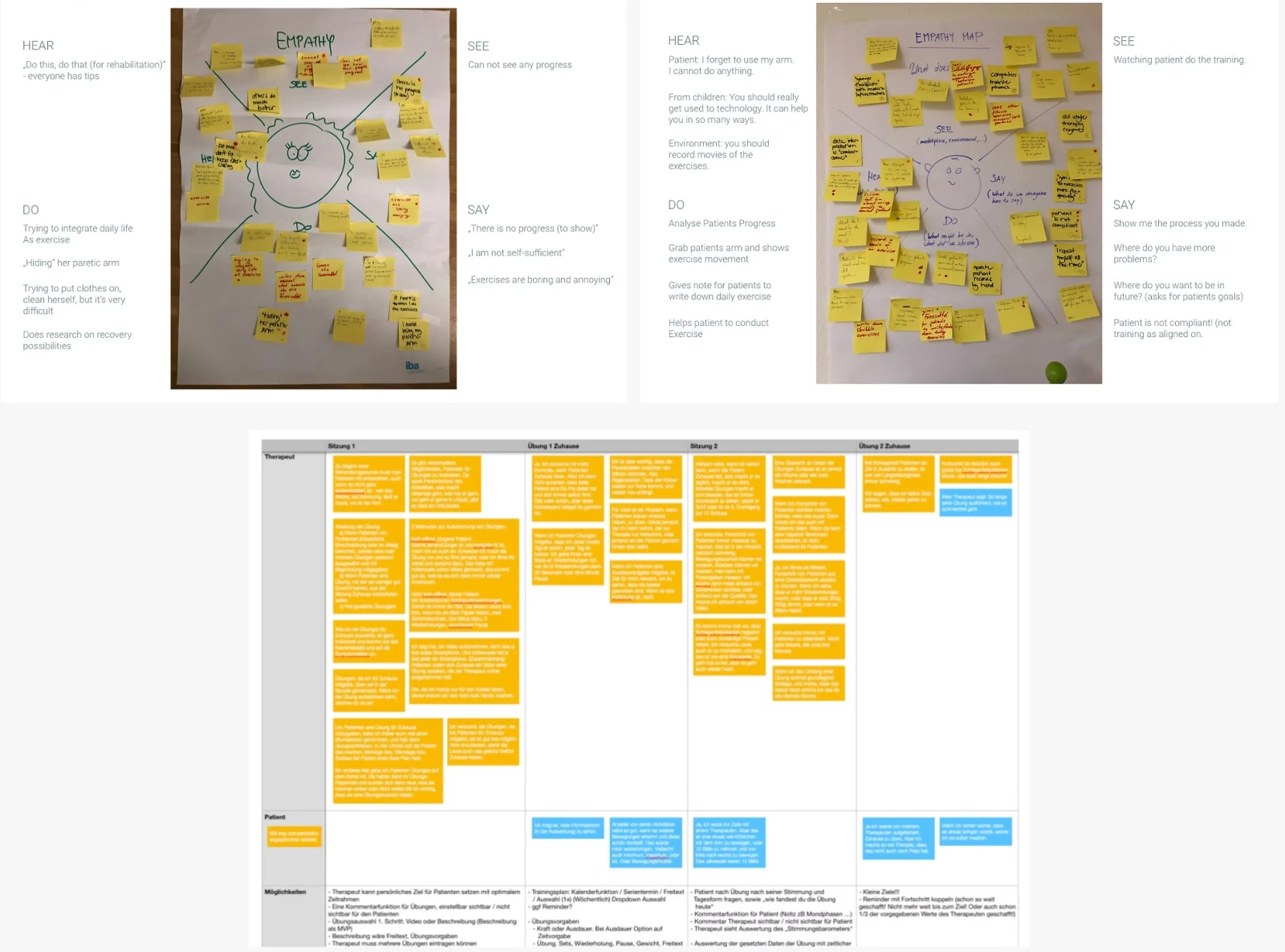
I interviewed five stroke patients and five occupational therapists, then used job stories, empathy maps, journey mapping and competitor research to understand the problem. Research exposed practical barriers and emotional challenges: memory, motivation, pain and the difficulty of describing progress.
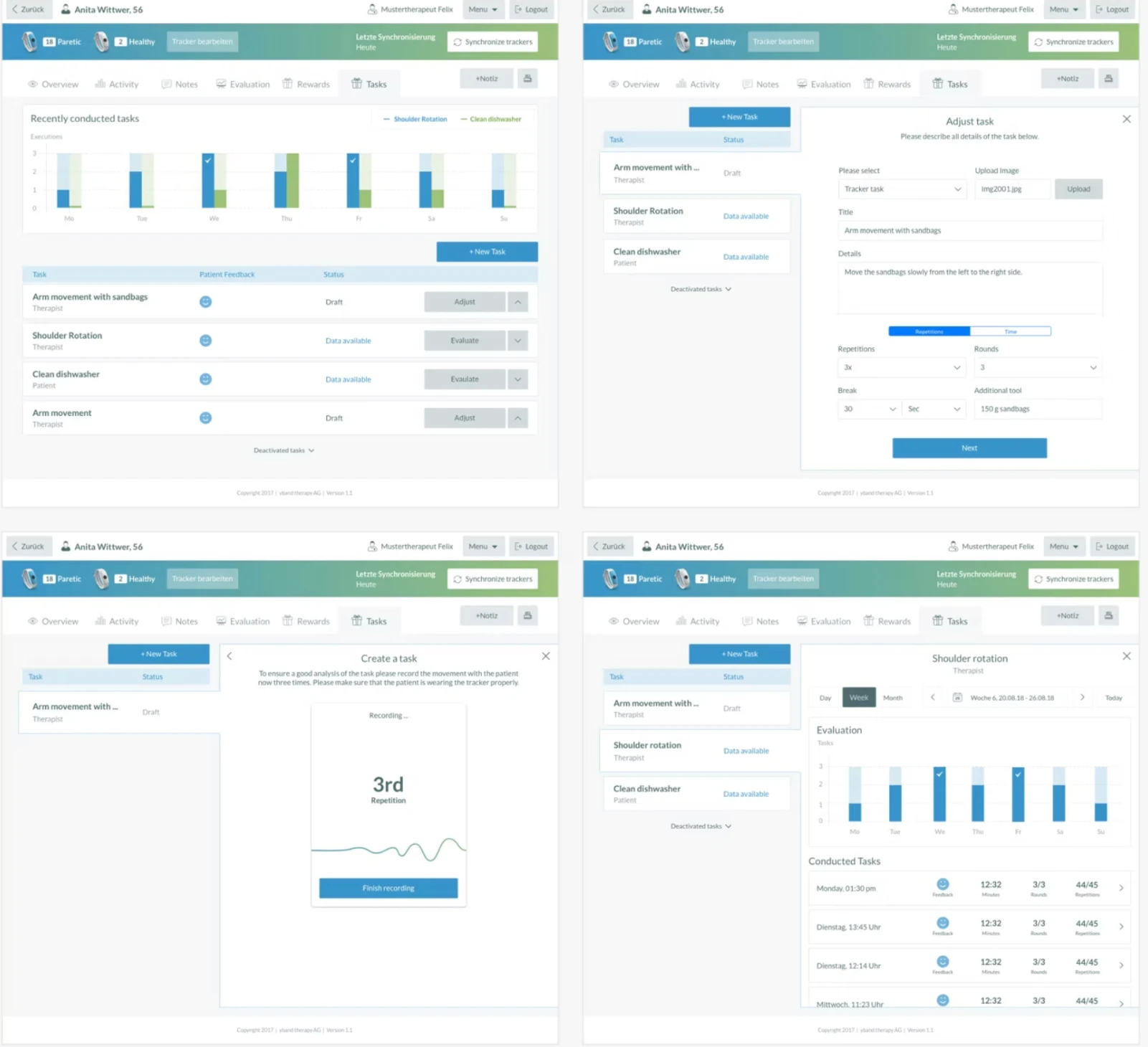
Connecting the therapist and patient experience
The therapist concept supported recording an exercise, setting repetitions and schedules, and reviewing progress. The patient concept provided the exercise, reminders and a structured training session. The proposed use of an arm-movement counter connected home practice to the therapist’s view.
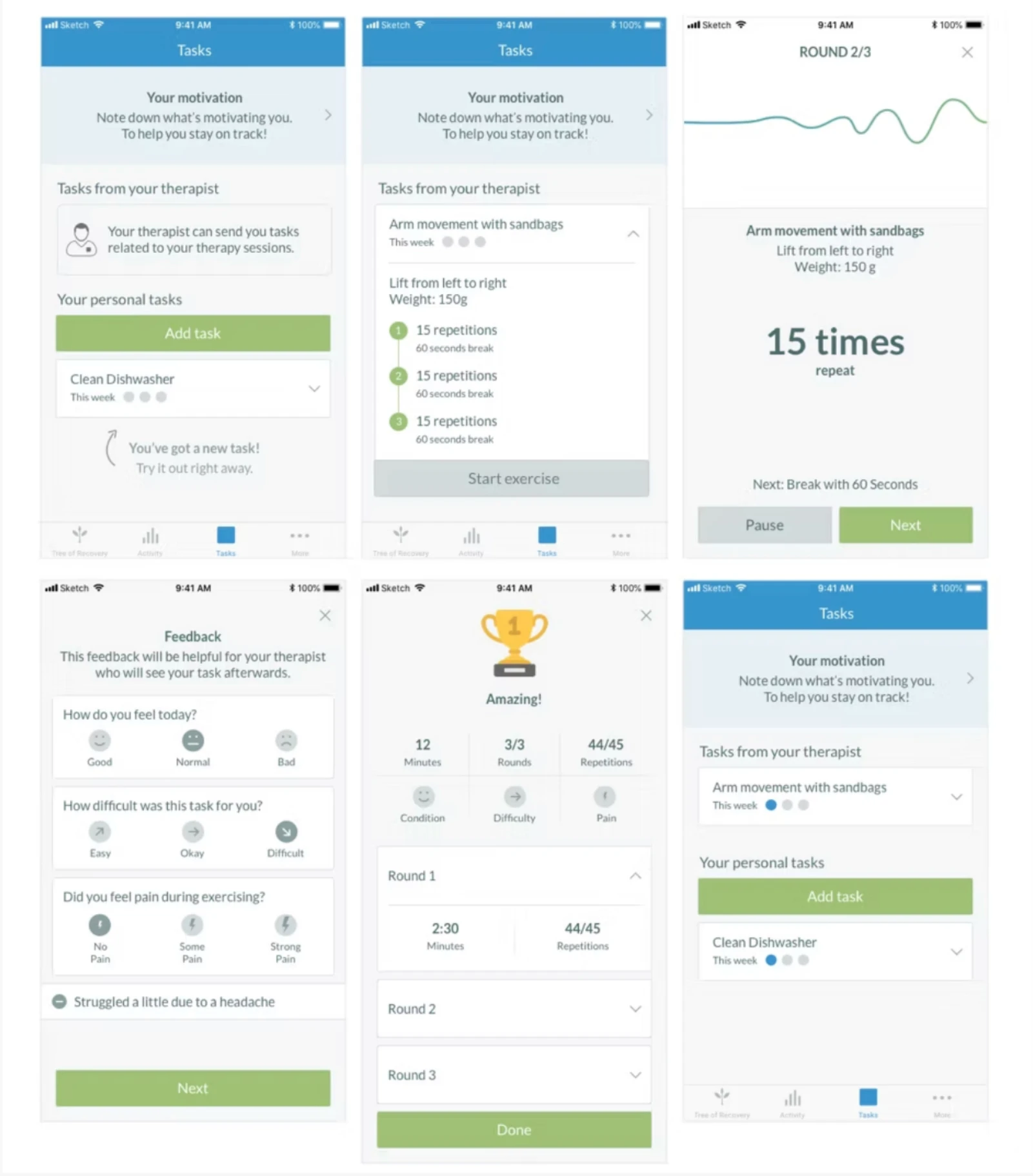
Motivation mattered as much as the exercise
Personal goals, supportive language and positive completion feedback were central to the patient experience. Usability testing found that patients appreciated therapist visibility, while therapists valued insight into home exercises. The team identified and addressed usability problems.
Validation without overstating the evidence
The original case study states that both features were still in development. The small active-user base did not support analytics-based uplift measurement, so evaluation focused on simplicity, motivation, perceived quality and usability. This case is presented as design and validation work, not a proven clinical outcome.